

Call us now
07971459500

 Send Inquiry
Aging Conveyor
Price 400000 INR/ Kilohertz
MOQ : as per requirement Meter
Aging Conveyor Specification
- Features
- Durable construction, Adjustable speed, Low maintenance
- Surface Finish
- Powder Coated
- Thickness
- Belt Thickness 3-5 mm
- Belt Type
- High-strength PVC
- Power Source
- Electric
- Material
- Mild Steel, PVC Belt
- Type
- Aging Conveyor
- Structure
- Mild Steel Frame
- Belt Conveyor
- Yes
- Roller Conveyor
- No
- Vertical Conveyor
- No
- Pneumatic Conveyor
- No
- Resistant Feature
- Corrosion Resistant
- Load Capacity
- 50-300 Kg/m (Customizable)
- Voltage
- 220-415 V
- Power
- 0.75-3 kW
- Speed
- 0.5-2 m/s
- Usage & Applications
- Electronic Product Aging, Testing Lines, Industrial Automation
- Drive Type
- Geared Motor Drive
- Safety Features
- Emergency Stop Switch, Guard Rails
- Installation
- Easy On-site Assembly
- Frame Color
- Industrial Grey or Custom
- Environment Suitability
- Suitable for ESD Safe Areas
- Noise Level
- <65 dB
- Operation Mode
- Continuous or Intermittent
- Conveyor Length
- Customizable from 3 to 30 meters
- Working Temperature Range
- 0°C to 60°C
- Control System
- PLC Controlled
- Inclination
- Horizontal
Aging Conveyor Trade Information
- Supply Ability
- 3000000 Meters Per Month
- Delivery Time
- 1 Week
- Main Domestic Market
- All India
About Aging Conveyor
High quality Aging Conveyor is used in Electronic industries to provide reliable feeding. They are used in various industries for storing, testing, packaging and inspection. A conveyor system is commonly used in the mining, automotive, agricultural, food and beverage, bottling, manufacturing, warehouse and logistics, and packaging industries. The key challenge with conveyor chains is that they tend to elongate over time because of the heavy weights that are passed through the systems. The Aging Conveyor is very efficient and easy to operate.
Specifications
| Minimum Order Quantity | 1 Piece |
| Capacity | 1-50 kg per feet |
| Length | 1-10 ft, 20-40 ft, 40-60 ft |
| Belt Material | Stainless Steel, Carbon steel, PVC, PU, Rubber, Aluminum |
| Material Handling Capacity | 100-150 kg per feet, 150-200 kg per feet, 50-100 kg per feet, 1-50 kg per feet |
| Width | 100 (mm), 400 (mm), 150 (mm) |
| Automatic Grade | Semi-Automatic |
Customizable Design for Any Workflow
Tailor the aging conveyor to your facilitys unique needs with a length range of 3 to 30 meters, industrial grey or custom frame colors, and easy on-site assembly. The modular structure and adjustable speed enable seamless integration into diverse testing or automation lines, ensuring operational flexibility and productivity.
Engineered for Safety and Durability
This conveyor is designed with operator safety at the forefront, featuring emergency stop switches and robust guard rails. The corrosion-resistant, powder-coated mild steel frame ensures longevity even in industrial environments, while the system remains quiet (<65 dB) during continuous use.
Optimal Performance for Electronics Testing
Equipped with high-strength PVC belts and a PLC-controlled drive, this aging conveyor efficiently supports continuous or intermittent operation. Its ESD-safe compatibility makes it perfect for sensitive electronic product aging and testing, ensuring reliable results and streamlined industrial automation.
FAQs of Aging Conveyor:
Q: How is the conveyor length customized to fit different operational layouts?
A: The aging conveyor can be manufactured in any length between 3 and 30 meters as per facility requirements. This customization ensures that the conveyor fits specific production line configurations, facilitating efficient material handling and workspace utilization.Q: What safety features does the aging conveyor offer during operation?
A: The conveyor prioritizes safety with an integrated emergency stop switch and strong guard rails. These features enable immediate halting during emergencies and prevent accidental contact with moving parts, ensuring protection for operators.Q: When should I choose a continuous versus intermittent operation mode?
A: Continuous operation is ideal for high-throughput environments where products require consistent movement during aging or testing. Intermittent mode is suitable for processes needing timed pauses, such as specific inspection or testing intervals. Both modes are selectable via the PLC control panel.Q: Where can this conveyor be installed, and is it suitable for ESD-sensitive areas?
A: This conveyor is designed for easy on-site assembly and can be installed in factory floors, laboratories, or industrial automation lines. Its ESD-safe compatibility makes it particularly suitable for electronics manufacturing and testing environments requiring electrostatic discharge protection.Q: What is the typical process for installing and setting up the conveyor?
A: Installation is straightforward and can be completed on-site. The modular components fit together for quick assembly, and the PLC system is pre-configured for efficient startup. Once powered (220415 V), the belt speed and operational mode can be set to match process requirements.Q: How does using this aging conveyor benefit electronics manufacturers?
A: Electronics manufacturers benefit from a customizable, corrosion-resistant conveyor with low maintenance requirements and adjustable speed. Its safe, ESD-friendly design and reliable operation streamline product aging, improve testing efficiency, and reduce downtime.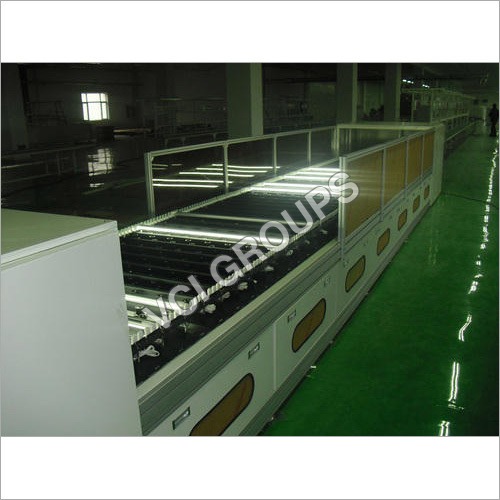
Tell us about your requirement

Price:
Quantity
Select Unit
- 50
- 100
- 200
- 250
- 500
- 1000+
Additional detail
Mobile number
Email

More Products in Industrial Conveyor Category
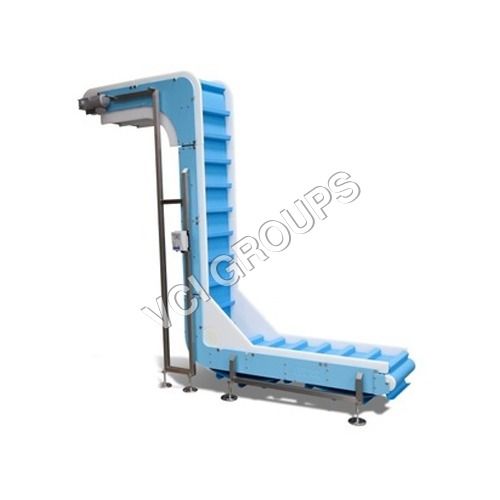
Continuous Vertical Conveyor
Price 12000 INR / Piece
Minimum Order Quantity : 01 Piece
Structure : Other, Robust Steel Frame
Type : Other, Material Handling Conveyor
Load Capacity : Up to 1500 kg per hour
Speed : 0.5 1.5 m/s (adjustable)
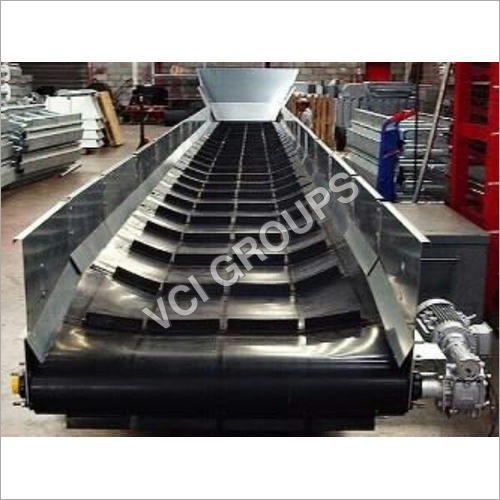
Chip Conveyor
Price 18000 INR / Meter
Minimum Order Quantity : 01 Unit
Structure : Other, Heavy Duty, Rigid
Type : Other, Chip Conveyor
Load Capacity : Customized as per requirement
Speed : 13 m/min
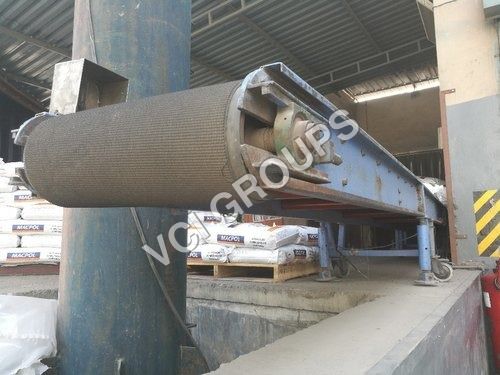
Container Loading Conveyors
Price 75000 INR / Pair
Minimum Order Quantity : 01 Piece
Structure : Other, Heavy Duty MS Fabricated Frame
Type : Other, Container Loading Conveyor
Load Capacity : 60200 Kg/mtr (customizable as per requirement)
Speed : 10 40 m/min (variable)
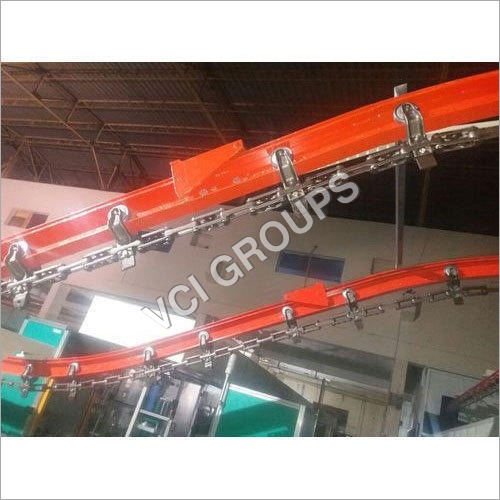
Overhead Conveyor
Price 5500 INR / Unit
Minimum Order Quantity : 01 Set Set
Structure : Other, Modular Steel Framework
Type : Other, Overhead Conveyor
Load Capacity : Up to 1000 kg per hanging point
Speed : 0.2 to 2 m/min (adjustable)

VASHNAVI CONVEYOR INDUSTRY
GST : 06AQEPK0022A1ZU
GST : 06AQEPK0022A1ZU
Plot No 7, Gali No 2, Sahupura Industrial Area, Near Bypass,Faridabad - 121004, Haryana, India
Phone :07971459500
 Send Inquiry
 Send Inquiry
 Send SMS
VASHNAVI CONVEYOR INDUSTRY
All Rights Reserved.(Terms of Use)
Developed and Managed by Infocom Network Private Limited.
Developed and Managed by Infocom Network Private Limited.

